- Open 24/7, Monday to Sunday
- Serving Coleman County
Common Early projects
Six dumpster uses that fit Early jobs
Early property work ranges from household cleanouts to corridor construction. These options cover the jobs we see most often, while the final container choice depends on material volume, weight, access, and where the truck can safely set down.
Residential Cleanout Dumpsters
For Early houses, apartment turnovers, and estate cleanouts, use a container that leaves room for the truck and keeps household debris off the driveway edge.
Household clearingHome Renovation Dumpsters
Bathroom, kitchen, and flooring projects in Early homes often create mixed debris. Separate heavy material from bulky contents before loading so the container stays within workable limits.
Remodel debrisYard Waste Dumpsters
Seasonal trimming and lot cleanup around Early can fill a container quickly with limbs, brush, and bagged waste. Keep dirt and unusually heavy material separate for review.
Yard cleanupMove-Out Dumpsters
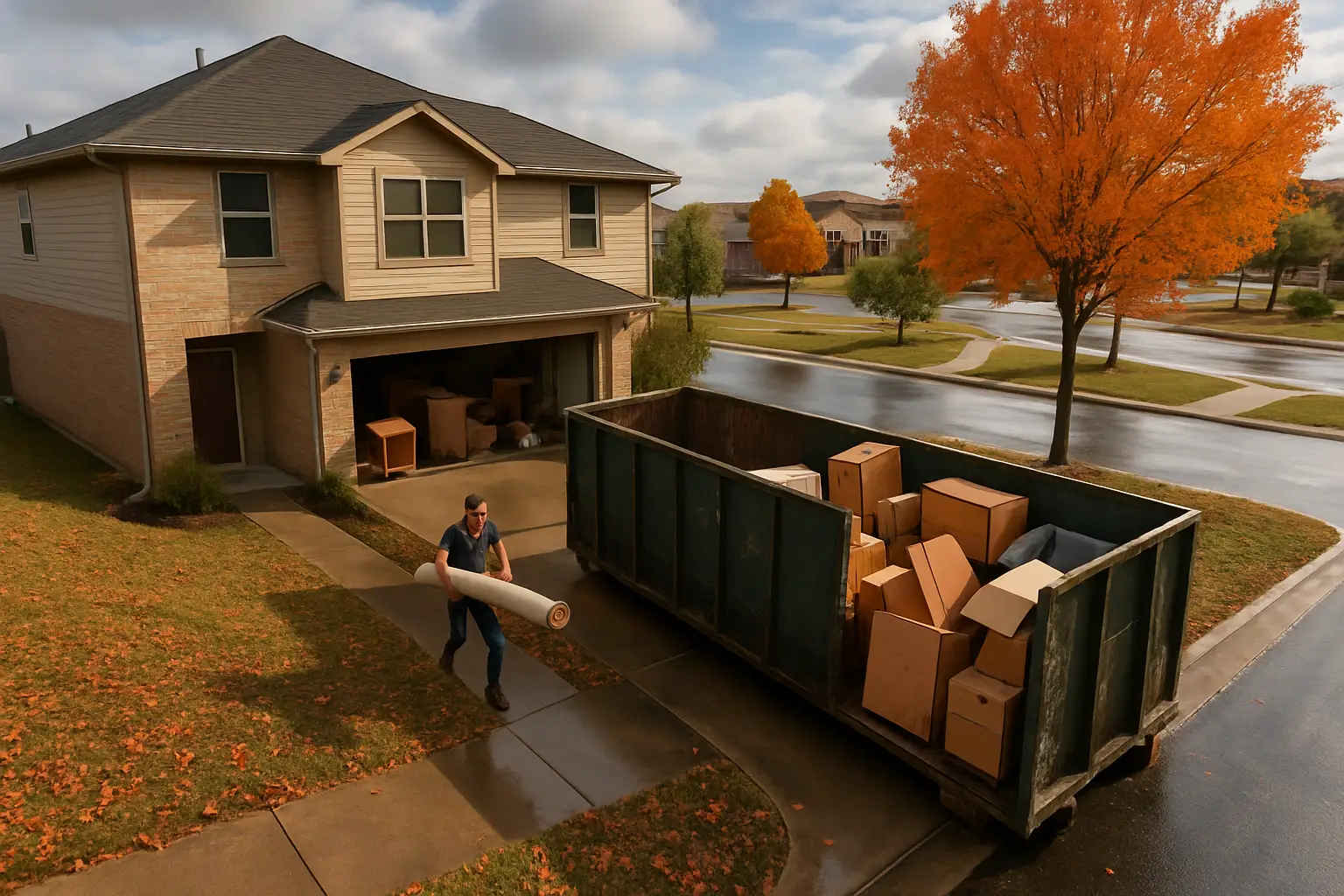
Move-outs near Early’s established neighborhoods and newer subdivisions need practical driveway access. Break down furniture and boxes first, then leave a clear path for loading.
Property turnoverRoofing Debris Dumpsters
Roofing work in Early produces dense shingles that can exceed a container’s useful capacity before it looks full. Keep delivery clear of the crew’s staging and tear-off area.
Roof replacementSame-Day Dumpster Delivery
Same-day scheduling may be possible for an Early job when a suitable container and safe placement route are available. We still need the address, material, and access details first.
Urgent scheduling
Weather and timing
Early seasons change how debris gets handled
Early’s hot, exposed conditions can affect both the container and the work around it. Roofing crews may need a placement point that does not interfere with staging, while household projects need a clear route from the door to the container. During storm periods, loose cardboard, insulation, and light yard debris should be loaded below the rim and secured as appropriate. Wet material becomes heavier, especially when soil, brush, or torn-out flooring is mixed together. Tell us what the debris is before delivery, because material type matters more than a rough guess based on the project name. A paved driveway is generally easier to inspect than soft ground, but the truck still needs room to approach and lower the container without striking curbs, fences, or overhead obstructions.
Scheduling also changes with the season. Spring yard work can overlap with remodeling, and summer heat may push loading toward cooler parts of the day. A storm can leave a commercial corridor or subdivision access lane muddy, blocked, or difficult for a truck to use. If rain is expected, choose a placement area that does not collect runoff and keep the approach free of parked vehicles. We can discuss a practical delivery window 24/7, Monday to Sunday, but an exact arrival time depends on route conditions, container availability, and safe access. Never fill above the rim or place heavy debris where the driver cannot inspect it safely.
Early placement details
Early driveways need a placement check
Early combines newer subdivision streets with older homes, established commercial properties, and open lots along the main corridors. A driveway that looks wide from the street may narrow near the garage, slope toward a drainage path, or leave too little room for the truck to lower a container safely. We ask where vehicles, utility lines, gates, and work crews need to remain before choosing a drop point. That check matters especially on active residential streets, where a container can block daily access if it is placed without considering turning space.
The town’s commercial growth changes the job as well. Retail improvements, office work, roof replacement, and small construction projects may have deliveries moving through the same access lane. On Early Boulevard or near the US 183 corridor, we look for a location that keeps the container clear of customer traffic and does not force loading into a travel path. If the container must sit on a public street, town permission may be needed first. Tell us the exact location and we will explain what placement conditions apply.
Early weather can affect when debris is loaded and where a container should sit. Strong sun dries lightweight material, while storms can leave cardboard, soil, and yard waste heavier and harder to cover. A sloped driveway may also send water toward the container during a hard rain. Blake Dumpster Rental photographs container condition at delivery and pickup, so the condition and placement are documented at both ends. Have the address, surface type, driveway slope, and planned loading area ready when you speak with the crew.
Before delivery
Prepare the Early property before the truck arrives
- Measure the Early driveway width and mark a placement area clear of gates, vehicles, and utility equipment.
- Move Early subdivision vehicles before delivery so the truck can approach, turn, and lower the container safely.
- Separate concrete, soil, and other heavy Early project debris from ordinary household materials before loading.
- Cover or secure lightweight Early yard waste when strong wind or storms are expected during loading.
- Tell Blake Dumpster Rental about slope, soft ground, overhead lines, and public-street placement before scheduling.
Early rental questions
What local customers ask before delivery
How do I choose a dumpster size for an Early home project?
Choose by the material’s volume, density, and loading method, not just by the room count. A bathroom update may fit a smaller container, while roofing, flooring, or a whole-house cleanout can need more room. In Early, driveway width and subdivision access also affect the workable choice. List the rooms, materials, and approximate pile size before scheduling so the crew can compare a practical tier.
Can a dumpster go in my Early driveway?
Usually, a driveway is the simplest placement because it keeps the container off public travel lanes, but the surface must support the truck and container. Early properties can have sloped approaches, narrow side access, fences, or newer subdivision restrictions that change the answer. Clear vehicles and toys, identify soft or cracked pavement, and describe the approach so placement can be reviewed before delivery.
Can I place a dumpster on an Early street?
A container on an Early public street usually needs town permission first, and the location must remain safe for traffic and nearby access. Requirements can depend on the street, duration, and exact placement. Do not reserve a street space before explaining the address and road conditions. Share the proposed side of the street, nearby driveways, and any signs or curb restrictions so the applicable conditions can be discussed.
What materials can I put in an Early dumpster?
Common household contents, renovation debris, roofing material, yard waste, and ordinary construction waste are often suitable, but certain liquids, chemicals, tires, appliances, and other restricted materials may require separate handling. Early renovation and commercial jobs can also produce dense concrete or soil that needs special review. Make a material list before loading and ask about anything wet, hazardous, unusually heavy, or pressurized.
How does weather affect dumpster delivery in Early?
Heat, wind, and sudden storms can change the safest placement and loading plan in Early. Rain may soften unpaved ground, add weight to cardboard and yard waste, or send runoff toward a container. A truck may need to use a firmer surface or adjust the delivery route after severe weather. Keep the approach open, avoid low drainage areas, and tell the crew about recent rain or forecast conditions.
Bring the Early job details
Have the address, debris type, driveway or street placement, access concerns, and preferred project schedule ready. Blake Dumpster Rental is available 24/7, Monday to Sunday, to review the practical container choice.
Click Here to Call(325) 335-3510Routes around Early
Dumpster service follows Early’s active corridors
Blake Dumpster Rental serves residential and commercial work around Early, including newer subdivision streets and established properties near the main commercial routes. Trucks come from Valera, so access details matter before a route is assigned. We also coordinate placements near Early Boulevard, the US 183 corridor, and FM 2287 corridor, where traffic, storefront access, and construction activity can affect the drop point. Give us the exact address and surface conditions so the route and container placement can be discussed accurately.